
LinkSafi
Digital safety for people who should not need to understand cybersecurity. An Android-first cybersecurity tool that checks suspicious destinations, detects phishing and impersonation, and warns users in language they can actually understand.
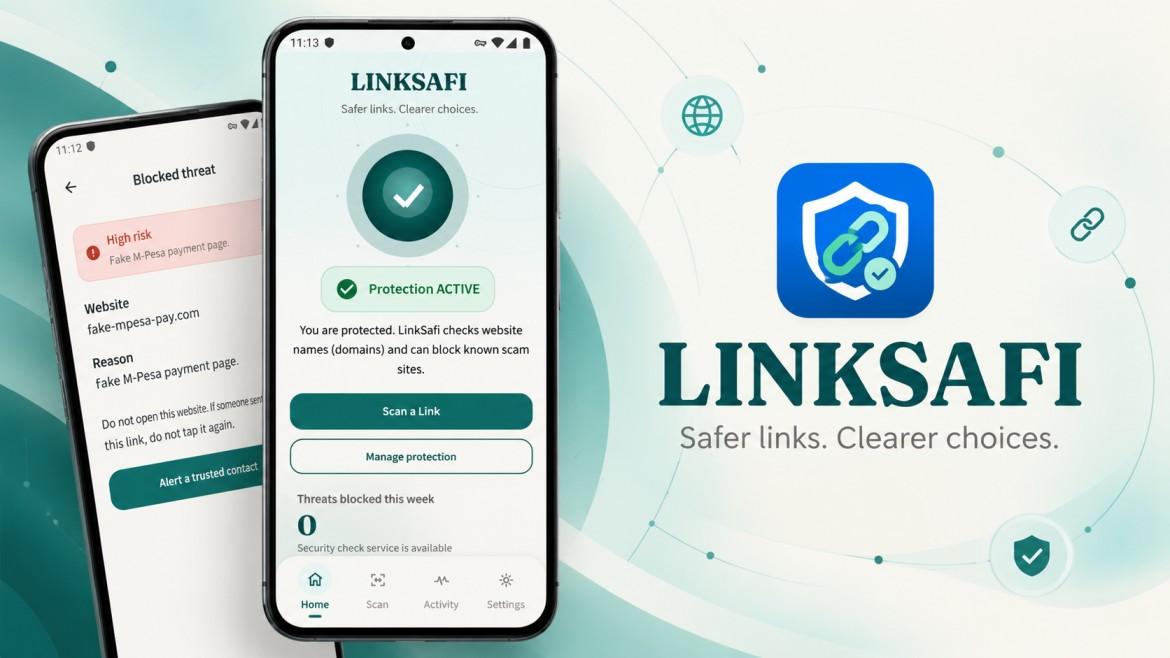
Overview
LinkSafi began with a simple question: what if my parents' phone could help them decide whether a link was dangerous before they opened the wrong website? The Android application provides the protection layer on the device while a Django-based backend performs deeper threat analysis and maintains security intelligence.
The Problem
LinkSafi started with my folks. They use WhatsApp, Facebook, SMS and the web every day, but modern scams are increasingly difficult to distinguish from legitimate websites and messages. Telling them to 'just be careful with links' still requires them to recognize phishing, lookalike domains and impersonation themselves.
The Approach
Protection should not require someone to understand cybersecurity. Instead of presenting reputation scores or technical indicators, LinkSafi explains what appears suspicious, why the user is being warned, and what they should do next. Device-level protection uses Android's VPN capabilities for DNS and domain filtering without decrypting HTTPS traffic or reading private communications.
System / Product Design
The product separates detection from explanation. Deterministic security signals such as threat feeds, domain reputation, suspicious URL characteristics, Unicode tricks, brand similarity and previously reported scams drive the risk decision. The Android client combines manual URL scanning, share intents, QR scanning, DNS protection, local caching, threat notifications, activity history and trusted contacts.
Technology
Kotlin · Jetpack Compose · Django · Django REST Framework · PostgreSQL · Redis · Celery · Android VpnService
Challenges
Security without surveillance
A security application can easily collect too much information. LinkSafi is designed to make domain-level decisions locally whenever possible and avoid turning protection into a record of someone's browsing activity.
A VPN is not the product
Android's VpnService is a mechanism for observing DNS and domain requests, not the product itself. Private DNS and browser Secure DNS can bypass that path, so the application also has to explain those limitations clearly.
HTTPS limits visibility
LinkSafi deliberately avoids installing certificates or performing man-in-the-middle HTTPS interception. That limits what the application can inspect, but preserves an important privacy and security boundary.
False positives destroy trust
Blocking a legitimate banking, government or shopping site can quickly make users stop trusting the product. A single suspicious characteristic is therefore not enough to classify a destination as malicious.
Key Decisions
Android first
The first client is native Kotlin because LinkSafi depends heavily on Android capabilities such as VpnService, foreground services, network handling, background execution and share intents.
Backend-first threat intelligence
The security engine lives independently of the Android application so the same intelligence can eventually support other clients such as browser extensions, APIs and additional mobile platforms.
Deterministic detection before AI
AI is not the security gatekeeper. Blocking and warning decisions come from explainable security signals. AI can assist with explaining those findings, but not independently decide whether a destination is malicious.
Designed around ordinary people
A warning should quickly answer three questions: Is this dangerous? Why are you warning me? What should I do? Everything else is secondary.
Outcome
LinkSafi is being built as an Android-first cybersecurity product with a Django threat-analysis backend and native Kotlin client. The initial milestone focuses on detecting suspicious destinations, explaining the risk clearly, and helping users avoid costly mistakes before they happen.
What I Learned
- The people who need cybersecurity protection the most are not necessarily the people who understand cybersecurity.
- 'Be careful what you click' is advice, not a security system.
- Security warnings are only useful when the person receiving them understands what to do next.
- Privacy matters even more when building software designed to protect vulnerable users.
- Sometimes the best product ideas start with a problem at home.